 01732 667 688


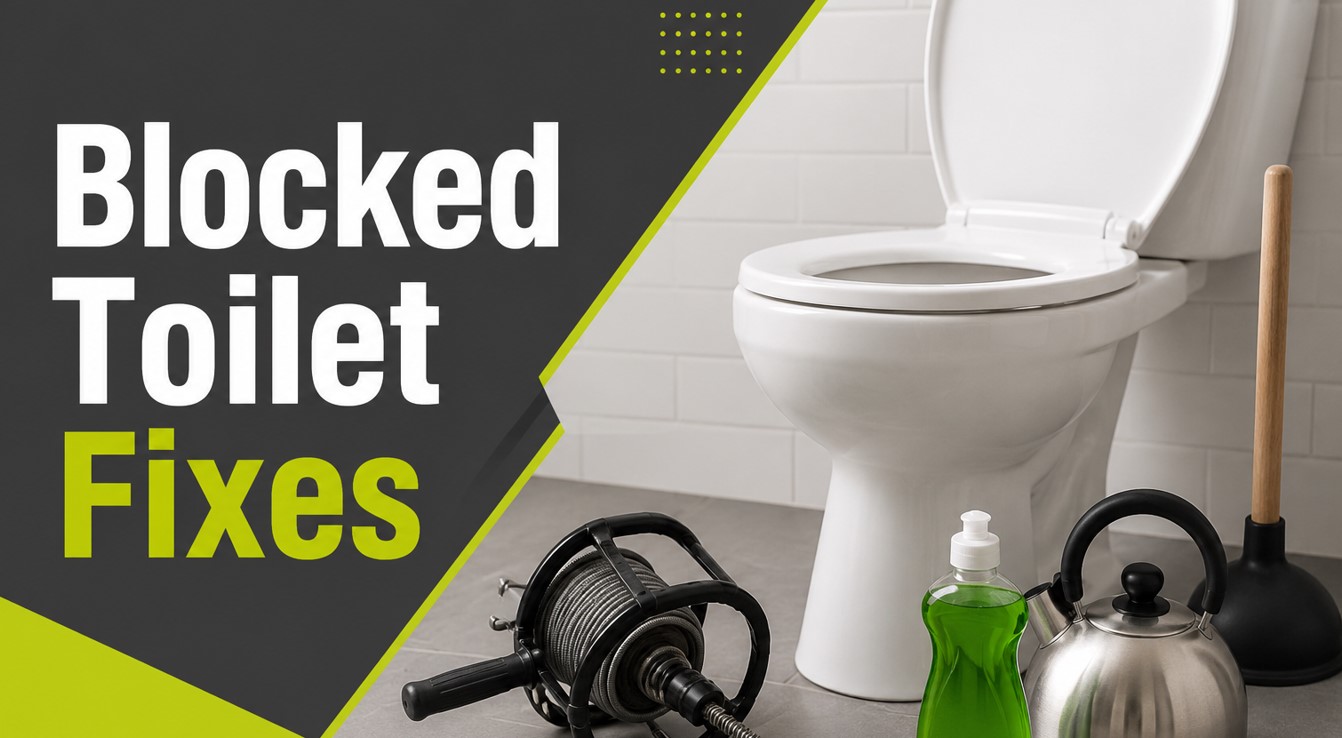

Emergency steps to save your bathroom
There are few household moments that trigger instant panic quite like a toilet that won’t flush properly. You press the button, the water level starts rising dangerously close to the rim, and suddenly you are staring down a very messy, very unpleasant crisis. If you live in a one-loo household or run a busy café, that creeping water level is an absolute nightmare.
Before you grab the nearest towel and accept defeat, take a deep breath. At Any Drains Direct, we have seen it all, from stubborn wet wipes to kids’ toys taking an unexpected swim. While some clogs definitely require professional help, there are several safe, effective blocked toilet fixes you can try right now to regain control of your bathroom.
This guide is designed to walk you through the exact emergency toilet unblocking methods we recommend trying before you pick up the phone. We will show you how to stop the water from spilling over, how to tackle the blockage safely, and exactly when it is time to throw in the towel and call our Kent-based drainage experts.
First things first: stop it getting worse
Your immediate priority is damage control. If the toilet is overflowing or looks like it might, do not flush it again. Hoping a second flush will force the water down is a gamble you will almost certainly lose.
Instead, look behind the toilet for the isolation valve on the water pipe leading to the cistern. Turn this clockwise to shut off the water supply. If you can’t find it, or it’s too stiff to turn, you may need to turn off your home’s main stopcock (usually located under the kitchen sink).
Once the water is off, grab some old towels or newspaper and lay them around the base of the toilet to protect your floors. Pop on a pair of rubber gloves, open a window for some ventilation, and get a bucket ready just in case. Now that the immediate panic is paused, you can figure out what you are dealing with.
What causes toilet blockages?
Before diving into the fixes, it helps to know what you are fighting against. Toilets are only designed to handle human waste and toilet paper. When a toilet keeps blocking, the culprit is usually one of the following:
- Too much toilet roll: Using excessive amounts of thick, plush toilet paper in a single flush is a classic recipe for a blocked loo.
- The “flushable” wipes myth: Baby wipes, makeup wipes, and sanitary items do not break down like toilet paper. Even if the packaging claims they are flushable, they are notorious for causing massive blockages.
- Foreign objects: If you have toddlers in the house, a missing toy car or bath sponge might be wedged in the U-bend.
- Limescale build-up: In hard water areas, limescale can accumulate in the pipes, narrowing the gap and making blockages much more frequent.
- Wider drainage issues: If your bath or sink is gurgling when you flush, or water is backing up elsewhere, the blockage is likely further down your main drainage system.
Emergency toilet unblocking steps you can try safely
If you are dealing with a standard paper or organic clog, you can often clear it yourself. Here is the most reliable blocked toilet fix UK homeowners can use without damaging their plumbing.
The plunger method that actually works
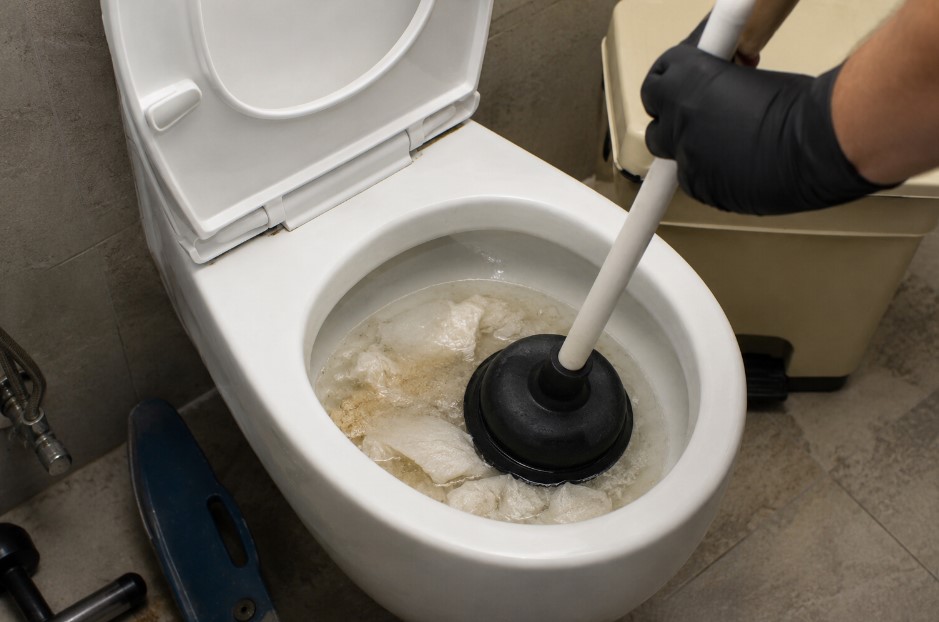
Not all plungers are created equal. For a toilet, you want a flange plunger (the one with the extra rubber flap pulling out from the bottom), as it creates a much better seal than a flat sink plunger.
Ensure there is enough water in the bowl to cover the rubber part of the plunger. If the bowl is empty, pour a little water in from a jug. Form a tight seal over the waste hole, then push down slowly at first to push the air out. Once the seal is secure, plunge vigorously up and down for about 20 to 30 seconds without breaking the suction. Pull up sharply at the end. If the water drains away with a satisfying gurgle, you have won.
Washing-up liquid and hot water
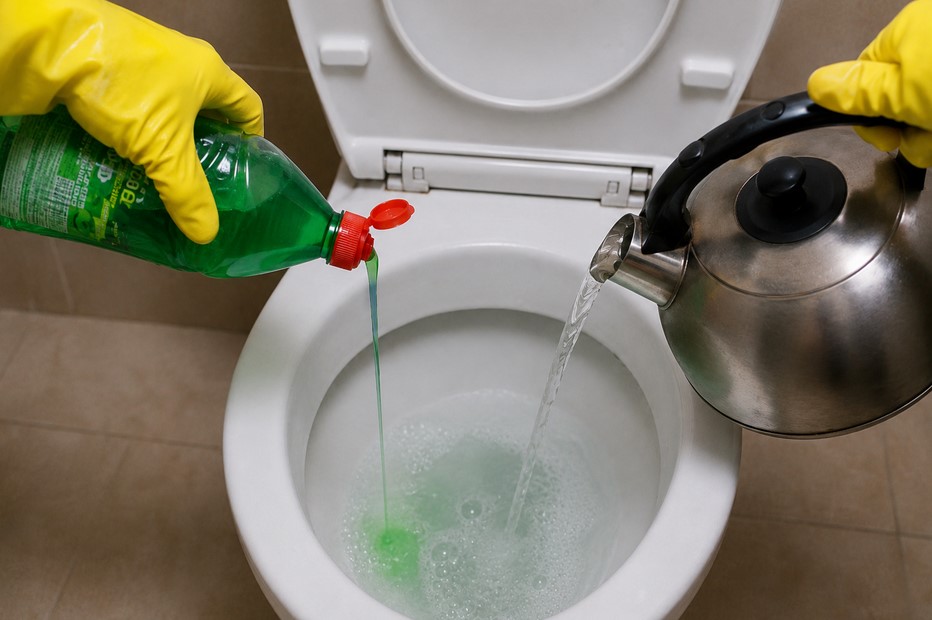
If you don’t own a plunger, head to the kitchen. Squirt a generous half-cup of standard washing-up liquid directly into the toilet bowl. Let it sit for about ten minutes so it can seep down and lubricate the trapped debris.
Next, fill a bucket with hot water from your tap. Do not use boiling water straight from the kettle, as the sudden extreme heat can crack the porcelain of your toilet bowl. Pour the hot water into the bowl from about waist height. The combination of gravity, heat, and slippery soap is often enough to force the clog through.
The toilet brush backup
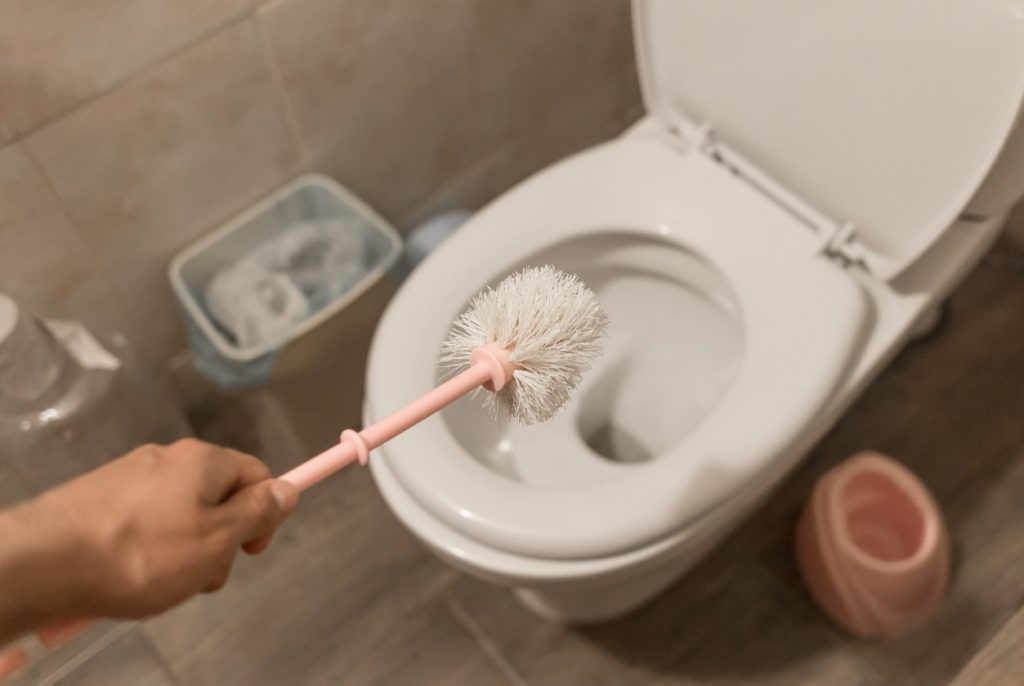
If you are caught completely off guard without a plunger, your humble toilet brush can act as a makeshift alternative. Wrap the bristle end tightly in a plastic bin bag to create a makeshift seal, then pump it up and down the waste hole just as you would with a plunger. It is surprisingly effective for minor blockages.
Using a toilet auger
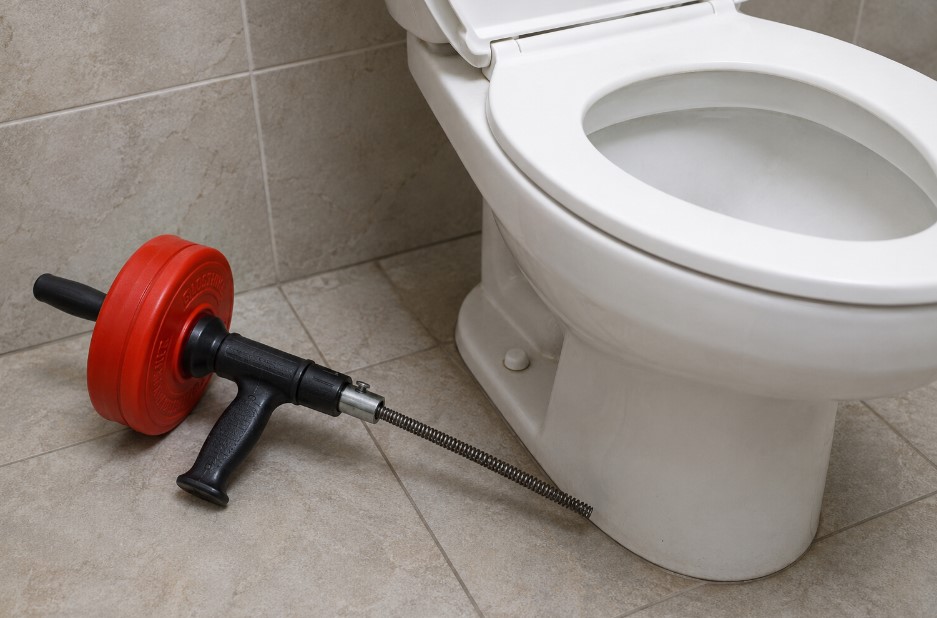
If you happen to own a plumbing snake or toilet auger, carefully feed the flexible coil down the toilet until you feel resistance. Turn the handle to break up the clog or snag it so you can pull it out. Be incredibly gentle—pushing too hard can scratch the toilet bowl or pack the blockage even tighter.
Things you definitely shouldn’t do with a clogged toilet
When panic sets in, people often reach for extreme solutions. Please avoid pouring harsh chemical drain unblockers down a blocked loo. If the chemicals fail to clear the clog, you are left with a bowl full of toxic, caustic water that is highly dangerous to deal with.
Likewise, never try to poke the blockage with a wire coat hanger, as you will almost certainly leave permanent grey scratches on the ceramic. Finally, avoid using makeshift hoses to jet water down the drain, as this usually just sprays dirty water all over your bathroom walls.
Signs you should stop DIY and call an engineer
Sometimes, a blocked loo is more than a simple DIY job. It is time to step back, wash your hands, and call in the professionals if:
- The water level is dangerously close to the rim and risks overflowing onto your floors.
- You have tried the plunger technique and the hot water trick, but the water stubbornly refuses to budge.
- You suspect a solid object, like a plastic toy or a toilet roll holder, is wedged in the pipe.
- You notice raw sewage smells coming from your drains, or water starts backing up into your shower tray when you flush.
- The same toilet keeps blocking week after week.
If you’re dealing with any of the above, give us a ring. At Any Drains Direct, we don’t charge a call out fee, so you won’t pay a penny just for us to turn up. We also offer an emergency 24 hour response, meaning we can be with you quickly—often within 90 minutes.
What we’ll do when we arrive at your property
When you book an engineer with us, you are getting a fully-qualified, fully-insured, and DBS checked professional who knows exactly how to handle drainage disasters.
First, we will diagnose the issue quickly and explain exactly what needs to be done. For stubborn blockages further down the pipe, we use high pressure water jetting to slice through fat, wipes, and debris, restoring your pipes to full flow. If you are suffering from recurring blockages, we can carry out CCTV drain surveys to look deep inside your drainage network, identifying hidden issues like cracked pipes, tree root ingress, or heavy limescale.
We pride ourselves on transparency. You will always know the cost upfront before we start, with prices for unblocking drains starting from just £75. There are no hidden fees, and absolutely no extra weekend charges. Plus, every job we complete comes with a 100 day written guarantee for your total peace of mind.
How to prevent the next bathroom disaster
Once your toilet is flushing freely again, a few simple habits will keep it that way. Follow the golden rule of the “3 Ps”: only pee, poo, and paper should ever go down the toilet. Keep a small bin in the bathroom for wipes, cotton buds, and sanitary products.
If you live in a hard water area, use a gentle limescale remover periodically to stop chalky deposits from narrowing your pipes. Finally, if you need to use a large amount of toilet paper, simply adopt a double-flush habit to give your plumbing a fighting chance.
Frequently asked questions
What’s the quickest blocked toilet fix UK homeowners can try first?
The fastest and most effective method is using a flange plunger. Create a tight seal and pump vigorously for 30 seconds to dislodge the clog using water pressure.
Can I unblock a toilet without a plunger?
Yes. A generous squirt of washing-up liquid followed by a bucket of hot (not boiling) water poured from waist height works brilliantly to lubricate and shift organic blockages.
Is boiling water safe to pour into a blocked toilet?
No. Never use boiling water straight from the kettle. The extreme, sudden temperature change can cause the porcelain toilet bowl to crack, leaving you with a much bigger and more expensive problem.
Does baking soda work to clear toilet blockages?
Yes, baking soda can sometimes help to clear minor toilet blockages, especially when combined with vinegar. Begin by pouring a cup of baking soda into the toilet bowl, followed by two cups of vinegar. Allow the mixture to sit for about 30 minutes as it fizzes and breaks down debris, then pour a kettle of hot (but not boiling) water into the bowl to flush it through.
However, this method is most effective for small clogs caused by organic matter and may not work for more significant or persistent blockages. If the issue persists, it’s best to consult a professional.
What if the toilet is overflowing?
Do not flush it again. Locate the isolation valve behind the toilet or your main home stopcock and turn off the water supply immediately to stop the flood, then call an emergency drain engineer.
Why does my toilet keep blocking even after I unblock it?
Recurring blockages usually point to a partial obstruction further down your pipework, such as a build-up of wet wipes, limescale, or even tree roots. A professional CCTV drain survey can pinpoint the exact cause.
Do you charge extra at weekends or evenings?
Not at all. We operate around the clock and there are absolutely no extra weekend charges for our services.
Do you have a call out fee?
No. We have zero call out fees. You only pay for the work we actually carry out to fix your problem.
Do you guarantee your work?
Always. Every job we complete is backed by our comprehensive 100 day written guarantee.
Fast, reliable help for your blocked drains
Dealing with a bathroom emergency is stressful enough without worrying about hidden costs or waiting days for help to arrive. If your plunger isn’t cutting it, or you simply don’t want to deal with the mess yourself, the team at Any Drains Direct is ready to step in.
Operating throughout Kent and the surrounding areas, our trusted engineers provide competitive local rates and a rapid response when you need it most. Don’t let a blocked loo ruin your day. C
all us now for immediate advice, or book an engineer directly through our contact page to get your drains flowing freely again.