 01732 667 688


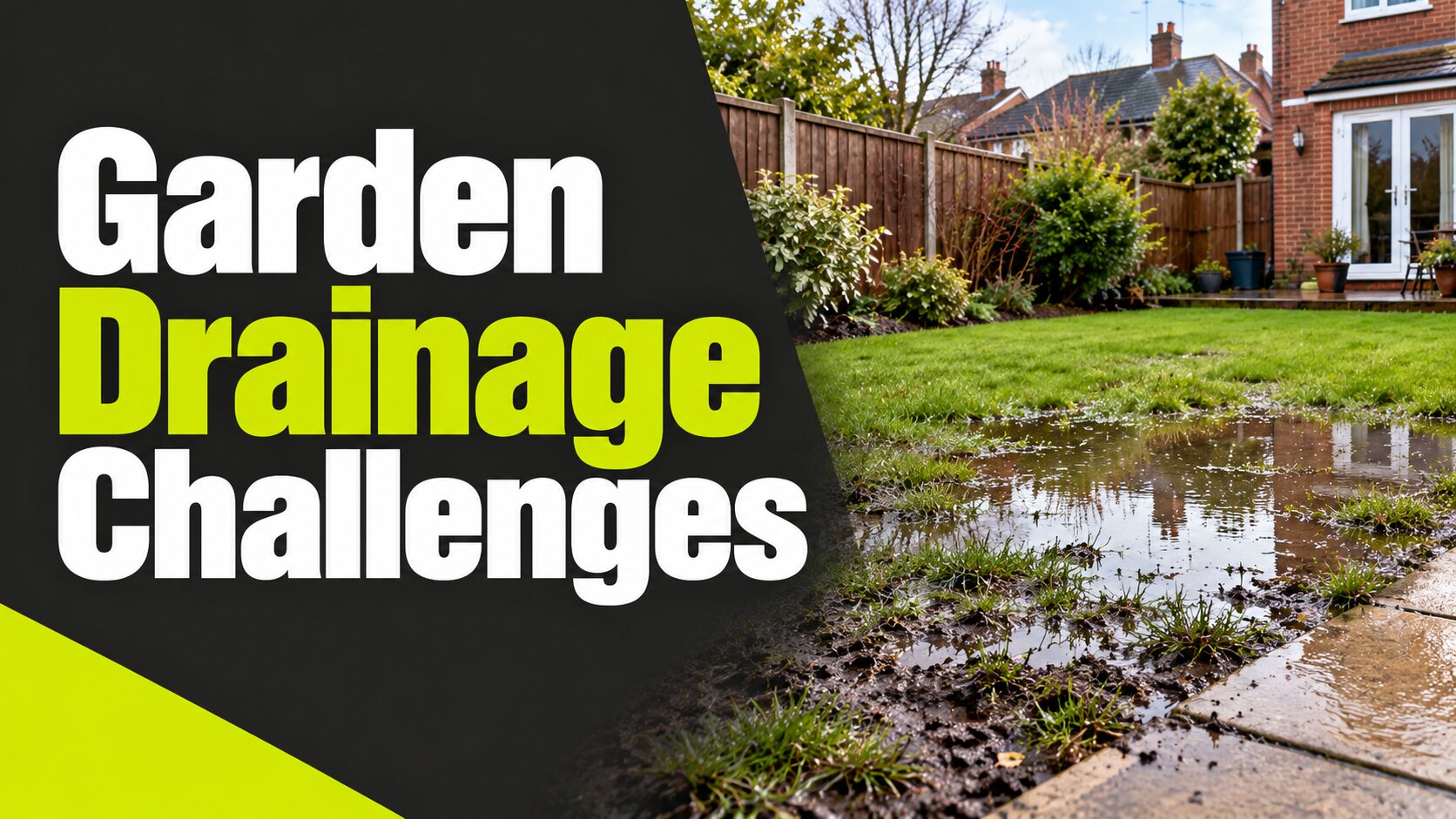

If you’ve spent any part of this autumn squelching across your own lawn in wellies, you’re not imagining things. Kent’s mix of heavy autumn rainfall and stubborn Wealden clay soil is a recipe for waterlogged gardens, and it catches out even the most house-proud homeowners. The good news? Garden drainage problems in Kent are almost always fixable once you know what you’re dealing with.
In this guide, we’ll walk you through why Kent gardens struggle so much once the weather turns, how to spot the early warning signs, a few tests you can run yourself this weekend, and the solutions that actually make a difference on clay-heavy ground. We’ll also flag when it’s worth calling in a specialist rather than digging (quite literally) into a bigger problem than you started with.
Why Kent gardens struggle in autumn (and why clay makes it worse)
Autumn is when garden drainage problems really show their teeth. The ground is already carrying moisture from summer thunderstorms, leaves clog up gullies and channels, and then a run of heavy, prolonged rain arrives with nowhere sensible to go. Add shorter days and cooler temperatures, and the ground simply doesn’t dry out between downpours the way it does in spring or summer.
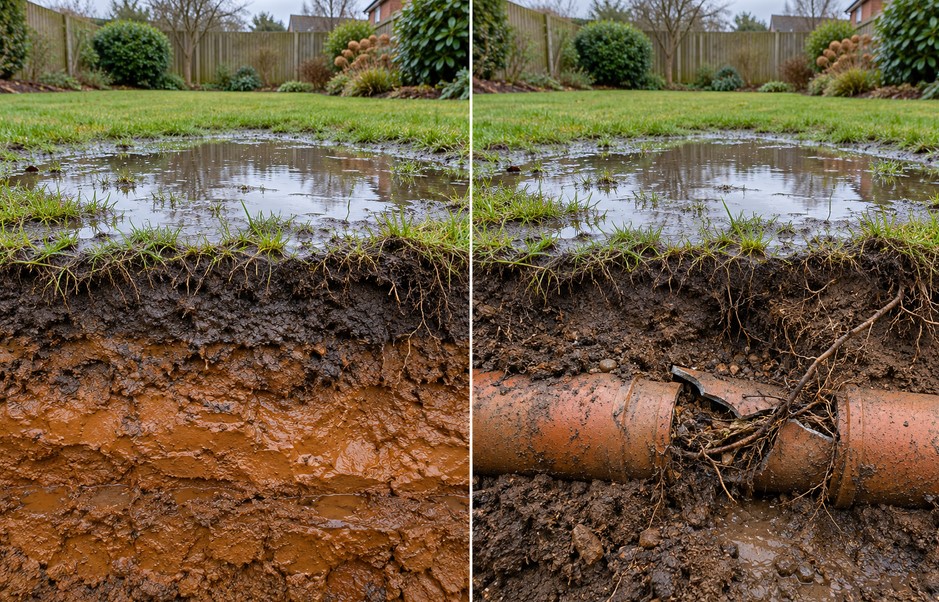
Now layer Wealden clay into that picture. Much of Kent sits on ancient clay and sandstone bands laid down roughly 140 million years ago, and that clay is notoriously poor at letting water through. It compacts easily, holds onto moisture like a stubborn houseguest, and creates what’s known as “perched water,” where rain sits on top of the clay layer rather than soaking through it. So while a sandy-soiled garden might drain within hours, a Wealden clay garden can stay soggy for days.
The tricky part is that two very different problems can look identical on the surface. A puddle that won’t budge might be down to clay saturation, or it might be a blocked drain, a failed soakaway, or a broken pipe underneath. Treating the wrong cause wastes time and money, which is exactly why diagnosis matters before you reach for a spade.
Quick signs you’ve got a drainage problem (not just “a bit of rain”)
Some pooling after a downpour is normal. Persistent, recurring waterlogging isn’t. Here’s what to look out for:
- Standing water that’s still there 24 to 48 hours after the rain has stopped
- Lawn that feels spongy underfoot even on drier days, or has started to smell musty
- Water visibly running towards your house, patio, or garage rather than away from it
- Gurgling drains, slow-clearing gullies, or inspection covers that overflow
- Unusually lush, vivid green patches of grass (often a sign water is pooling just below the surface)
If you’re nodding along to two or three of these, it’s worth investigating properly rather than hoping next week’s dry spell sorts it out.
The “don’t guess” checklist: simple garden drainage tests you can do this weekend
Before calling anyone, a bit of detective work can save time and help you describe the problem accurately.
- Map the puddles. Note where water collects and which direction it flows during and after rain.
- Check your soil. Dig a small test hole roughly 30cm deep. If you hit dense, sticky orange-brown clay, that’s your Wealden clay layer, and it’s a strong clue as to why water isn’t disappearing.
- Try a basic percolation test. Dig a hole about 30cm square and deep, fill it with water, and time how long it takes to drain. Anything still full after several hours points to genuinely poor infiltration.
- Inspect gullies and channels. Autumn leaf litter is one of the most common (and easiest to fix) causes of surface pooling.
- Watch your downpipes during rainfall. Are they discharging freely, or backing up at the base?
A word of caution: avoid poking around near anything you’re not sure about, particularly buried pipework or cabling. If the test hole fills straight back up from underground, or you suspect something structural, that’s your cue to get a professional opinion rather than start excavating.
Common causes of clay soil drainage problems in Kent
Once you’ve done a bit of your own investigating, the likely culprit usually falls into one of these categories:
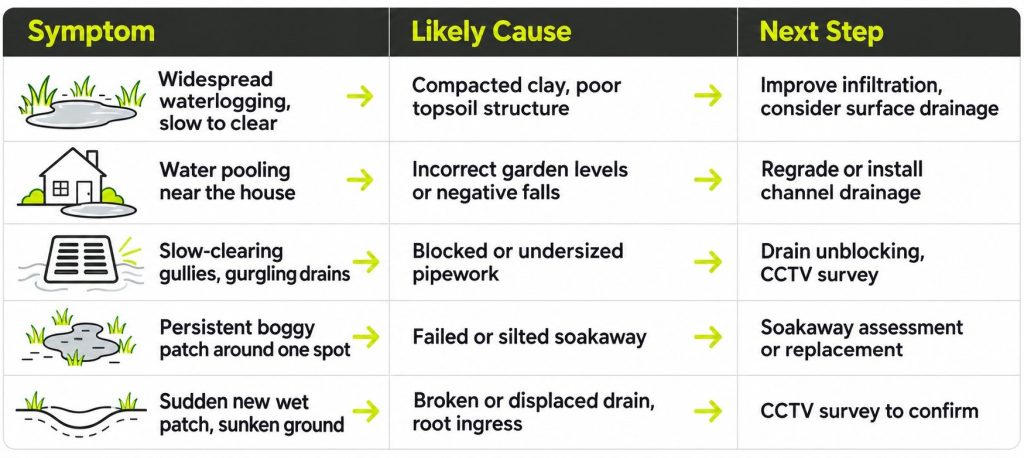
That last point is worth stressing: a CCTV drain survey lets us see exactly what’s happening underground without digging up half the garden on a hunch.
Solutions that actually work for garden drainage in Kent
Here’s the order we’d generally recommend tackling things, from least disruptive to more involved.
Leaf and debris management (the unglamorous hero)
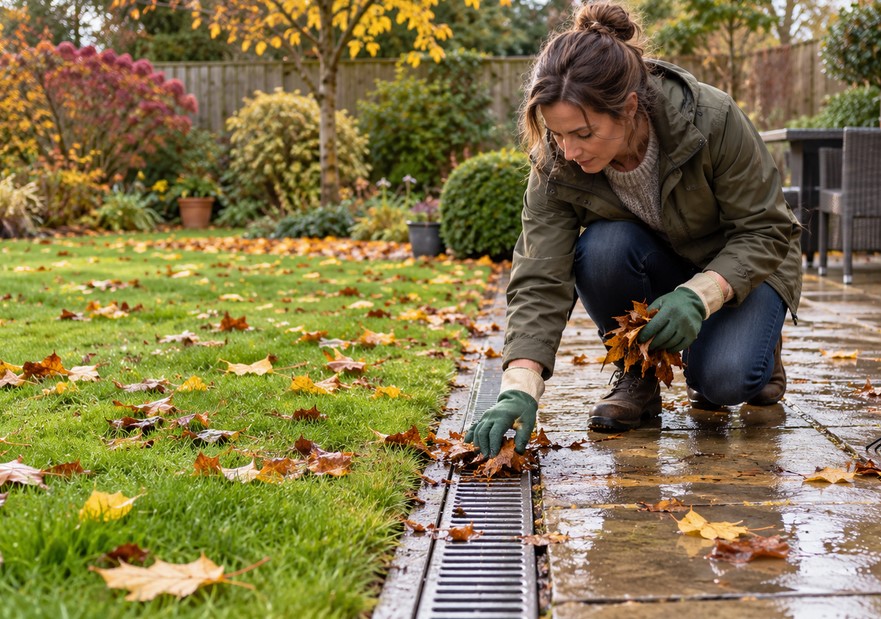
Honestly, half of the “drainage emergencies” we get called out to in October and November turn out to be a gully doing an impression of a compost heap. Clearing leaves, silt, and debris from channels and drain covers regularly through autumn solves more problems than people expect, and it costs nothing but a bit of time.
Improve infiltration where possible, even on clay
You can’t turn Wealden clay into free-draining sandy loam overnight (and be wary of anyone who suggests simply “adding sand,” which can actually make clay drainage worse by creating a concrete-like mix). What does help:
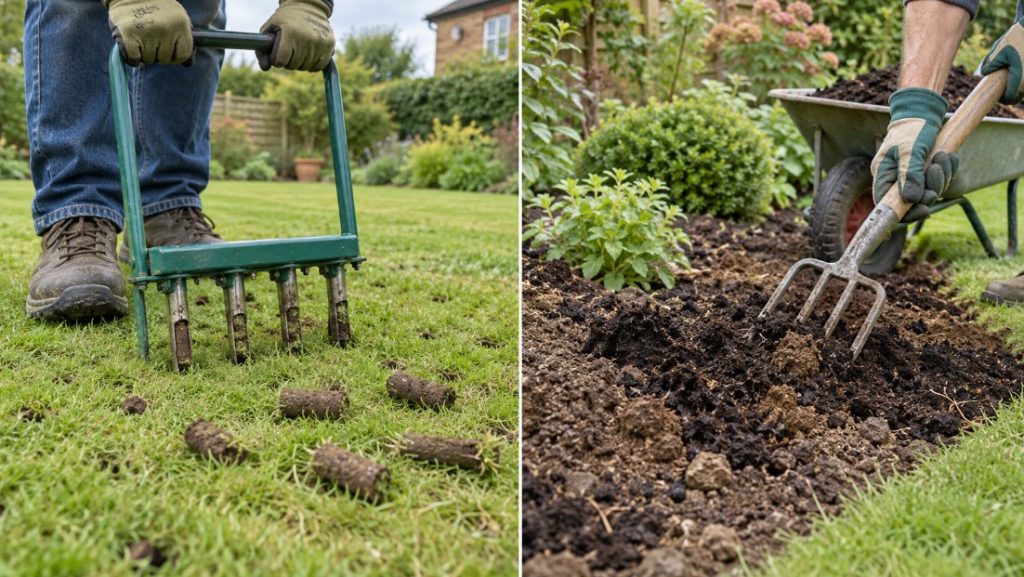
- Regular lawn aeration to relieve compaction
- Working organic matter into topsoil over time to improve structure
- French drains, properly built with a perforated pipe, gravel surround, and geotextile membrane, running to a suitable outlet
French drains can work well in clay, but they need to be oversized compared with a sandy-soil equivalent, because the surrounding ground simply can’t absorb water as quickly.
Surface water capture and conveyance
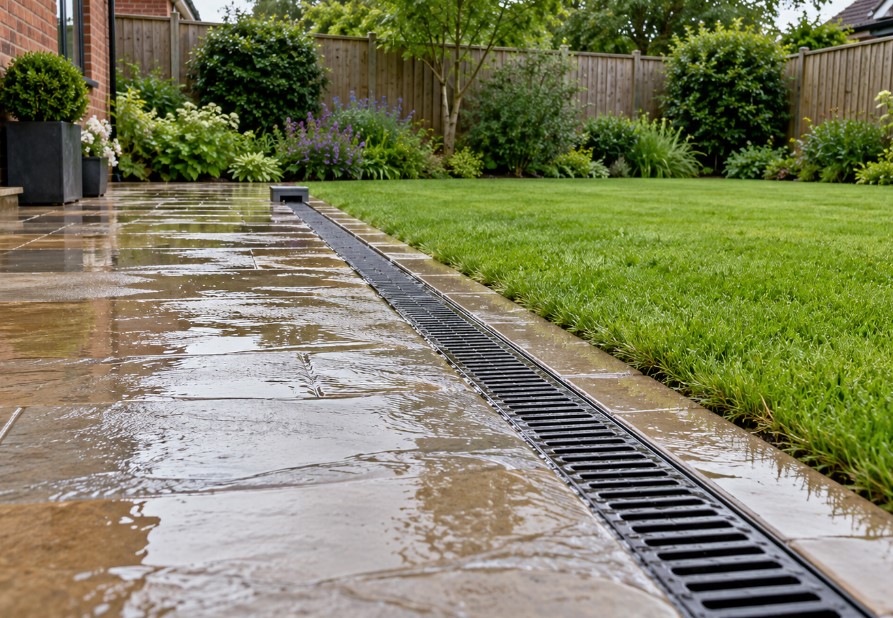
Sometimes the smartest move isn’t to make the water disappear into the ground, but to guide it away entirely. Channel drains along patios, driveways, and low points, fitted with the correct fall and a silt trap, can move surface water to a proper outlet before it ever gets the chance to pool.
Soakaways: when they help, when they fail, and when you need replacement
A soakaway disperses water into the surrounding subsoil, but on heavy clay, it’s working against the odds from day one unless it’s sized generously and built correctly. Signs your soakaway has had enough include:
- Water backing up rather than draining away
- The same patch staying saturated no matter the weather
- A musty or stagnant smell near the soakaway
- Problems returning within weeks of any clearing attempt
Older rubble-pit soakaways typically last 25 to 35 years in clay soil before silting up completely, a process engineers call “blinding.” If yours is showing these signs, soakaway replacement in Kent’s clay-heavy ground is usually more effective than repeated maintenance, and we can assess whether refurbishment or a full replacement makes more sense for your garden.
When blocked drains are the real culprit
Not every soggy garden is a soil problem. Roots, silt build-up, and ageing pipework can all cause blockages that mimic clay drainage issues perfectly. This is where we lean on CCTV drain surveys to get eyes on the actual pipe, followed by high-pressure water jetting to clear blockages, or no-dig drain relining where a pipe needs repair but doesn’t need full excavation. Less mess, faster diagnosis, and a fix that lasts.
Our recommended Kent autumn action plan
- Early autumn: Clear leaves and debris from gullies, check downpipes are flowing freely, do a quick visual inspection.
- During heavy rain: Watch where water flows and where it backs up. Take note (or a quick photo) for reference.
- After rainfall: If pooling is still there after 24 to 48 hours, it’s time to decide between a DIY fix and a professional assessment.
- Before winter sets in: Get any drainage improvements or repairs done while conditions allow, rather than waiting for the coldest, wettest months.
When it’s time to call in a drainage specialist
Some situations are worth escalating straight away: repeated flooding in the same spot, water pooling near your foundations, foul smells, gurgling drains, overflowing manhole covers, or a soakaway that’s clearly given up. In these cases, guesswork tends to cost more than it saves.
When you get in touch with us, we’ll ask the right questions over the phone, then get an engineer out, often within 90 minutes depending on your location and demand. Every one of our engineers is DBS checked and insured, and we don’t charge a call-out fee or add extra charges for weekend visits. If we carry out repair work, it’s backed by our 100-day written guarantee, so you’re not left wondering whether the fix will hold through winter.
FAQs
What’s the fastest fix for standing water in a Kent garden?
Clearing leaves and debris from gullies and drain channels is the quickest win and solves a surprising number of cases. If water’s still pooling after that, a percolation test will tell you whether you’re dealing with a soil issue or something underground.
Why does Wealden clay drain so badly, even when it hasn’t rained much?
Wealden clay has very fine particles that compact tightly together, leaving little room for water to pass through. Once saturated, it can stay that way for days, even after the rain itself has been fairly light.
Do French drains work in clay soil?
Yes, but they need to be built correctly and sized generously, with a gravel surround, geotextile membrane, and a proper outlet. On clay, an undersized French drain will simply fill up and stop working.
How do I know if my soakaway has failed and needs replacing?
Look out for water backing up, a patch that stays wet no matter the weather, bad smells, or flooding returning within weeks of clearing. Older rubble-pit soakaways in clay soil typically last 25 to 35 years before they need replacing.
Can a blocked drain cause my garden to flood?
Absolutely. A blocked or damaged pipe can mimic the symptoms of poor clay drainage almost exactly, which is why a CCTV survey is often the quickest way to rule it in or out.
What’s involved in a CCTV drain survey, and is it messy?
We feed a waterproof camera through the drainage system to see exactly what’s happening underground, whether that’s a blockage, root ingress, or a broken pipe. It’s non-invasive, so there’s no digging involved just to diagnose the issue.
How much does garden drainage work typically cost in Kent?
It varies depending on what’s causing the problem and how extensive the fix needs to be, from a simple gully clear-out to a full soakaway replacement. We offer free, transparent quotes so you know exactly what you’re paying for before any work starts.
Do you charge extra for weekend call-outs?
No. We don’t add extra charges for weekend visits, and there’s no call-out fee either.
Ready to sort your garden drainage once and for all?
A waterlogged Kent garden isn’t something you have to live with every autumn. Whether it’s a quick gully clear-out or a full soakaway replacement, we can get to the bottom of it, often within 90 minutes of your call.
No call-out fee, no hidden charges, and every repair backed by our 100-day written guarantee. Get in touch with our team today for a free quote and let’s get your garden draining properly again.